- Veterinary View Box
- Posts
- Thymic Hematomas in Puppies May Signal Rodenticide Poisoning—Even Without Known Exposure
Thymic Hematomas in Puppies May Signal Rodenticide Poisoning—Even Without Known Exposure
Journal of Veterinary Diagnostic Investigation 2002

Obi Veterinary Education
January 15, 2026
Alan D. Liggett, Larry J. Thompson, Ken S. Frazier, Eloise L. Styer, Lowell T. Sangster
Background:
Thymic hematoma is a rare, often fatal lesion in young dogs, sometimes presumed idiopathic or secondary to trauma. However, hemorrhage involving the thymus has also been observed in rodenticide toxicity cases. This study aimed to evaluate the histopathologic features of thymic hematomas in juvenile dogs and assess the role of anticoagulant rodenticides as a potential underlying etiology.
Methods:
Ten cases of thymic hematoma in dogs aged 9–24 weeks were reviewed from necropsy records. High-performance liquid chromatography was used to detect rodenticides (warfarin, brodifacoum, bromadiolone) in fresh liver samples where available. Histological sections of thymic tissue were evaluated for hemorrhage location, loss of architecture, inflammation, necrosis, and evidence of thymic involution. Findings were compared between confirmed rodenticide toxicosis cases and presumed idiopathic cases.
Results:
Five of the ten cases were confirmed as anticoagulant rodenticide toxicosis: bromadiolone (2), brodifacoum (2), and warfarin (1). In the remaining cases, rodenticide testing was negative or not performed due to specimen limitations. Histologically, hemorrhage primarily affected the thymic medulla and interlobular septa, sometimes replacing normal architecture. Severe cases showed necrosis, capsular disruption, and leukocytoclastic vasculitis. Two dogs displayed fibroangioplasia, indicating subacute hemorrhage. These changes were indistinguishable from idiopathic hemorrhages in morphology. None of the thymic tissues showed evidence of physiologic involution, and affected dogs were younger than typical for normal thymic regression.
Limitations:
Rodenticide assays were not performed in all cases, and fixed tissues limited retrospective testing. Absence of rodenticide detection does not exclude exposure to untested compounds. The small sample size and lack of clinical histories regarding exposure also limit conclusions.
Conclusions:
Thymic hematoma in young dogs may be caused by anticoagulant rodenticide toxicosis, even without a known exposure history. Histologic lesions resemble those previously described as idiopathic. Rodenticide screening should be conducted in any case of thymic hemorrhage without clear trauma or vascular anomaly, especially given the potential for subclinical or indirect exposure. Thymic hemorrhage should not be misinterpreted as normal involution.
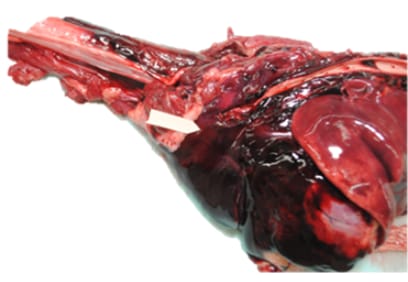
From Williams LJ, et al. Pathology in Practice. J Am Vet Med Assoc 2014;244:905-907.
Acute thymic (arrow), mediastinal, and pericardial sac hemorrhage
How did we do? |
Disclaimer: The summary generated in this email was created by an AI large language model. Therefore errors may occur. Reading the article is the best way to understand the scholarly work. The figure presented here remains the property of the publisher or author and subject to the applicable copyright agreement. It is reproduced here as an educational work. If you have any questions or concerns about the work presented here, reply to this email.